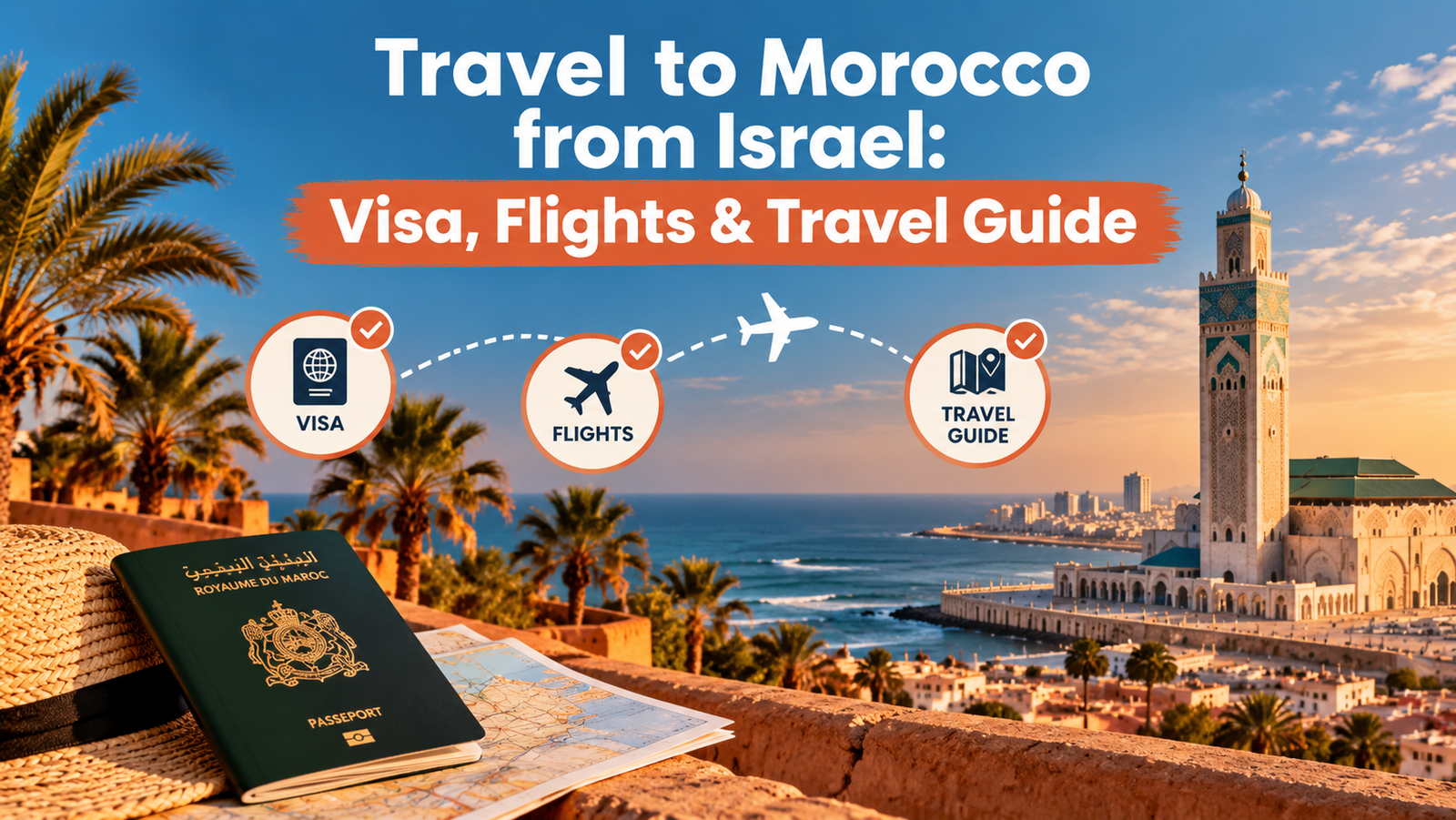
Travel to Morocco from Israel: Visa, Flights & Travel Guide
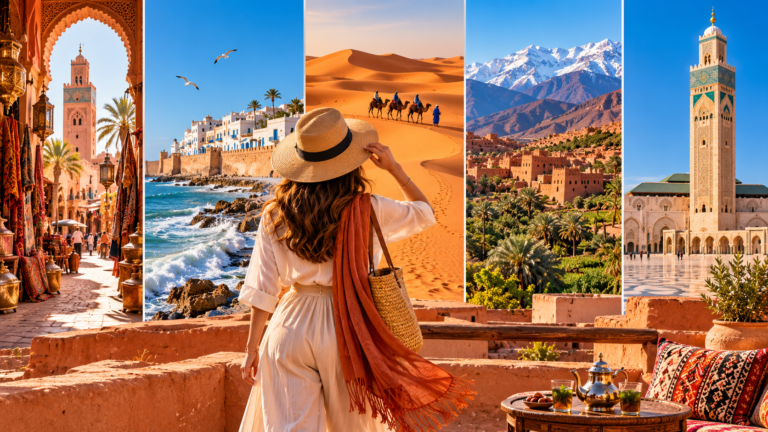
Planning to travel to Morocco from Israel? Morocco offers an exceptional combination of historic medinas, vibrant markets, Atlantic beaches, Atlas Mountain landscapes and Sahara Desert experiences.
For Israeli travelers, Morocco can be an especially meaningful destination thanks to the country’s long and diverse Jewish heritage, alongside its Arab, Amazigh and Andalusian cultural influences.
From Marrakech and Fes to Essaouira and the Sahara, this guide explains the essential things to know before planning your trip from Israel to Morocco.
Important: Entry rules, flight schedules and security recommendations can change. Always verify the latest requirements before booking your trip.
Is Morocco a good destination for travelers from Israel?
Morocco offers a wide range of experiences for travelers interested in history, culture, gastronomy, nature and heritage.
The country’s main tourist destinations include Marrakech, Fes, Casablanca, Rabat, Chefchaouen, Essaouira, Agadir and the desert regions around Merzouga. The Moroccan National Tourist Office highlights the country’s medinas, cultural heritage, gastronomy, traditional crafts and diverse landscapes as major attractions.
For travelers interested in Jewish heritage, Morocco also offers important historical sites and former Jewish quarters, known as mellahs, in several cities.


What are the visa requirements for Israelis visiting Morocco?
This is one of the most important questions to check before booking your trip.
Morocco’s official Accès Maroc system lists Israel among the nationalities eligible to apply for a Moroccan eVisa under Category A. The official information states that applicants in this category need an ordinary passport valid for at least 90 days from the date of the application.
The Moroccan eVisa has a maximum validity of 180 days from issuance, allows one entry, and permits a stay of up to 30 days. The official information gives a target processing time of 24 working hours for express applications and 72 working hours for standard applications, although travelers should apply sufficiently in advance rather than relying on the minimum processing time.
The Moroccan National Tourist Office also directs travelers to the official Accès Maroc portal to check their individual visa requirements and submit or track electronic applications.
Before booking your flight: check your exact eligibility using the official Moroccan portal because requirements can depend on nationality, passport type, country of residence and purpose of travel.
Are there direct flights from Israel to Morocco?
Flight availability can change depending on the season and airline schedules.
In July 2026, Israeli airline Arkia announced the resumption of direct flights between Tel Aviv and Marrakech from August 24, 2026, after a suspension of the route. The announced service was planned for twice weekly.
Because airline schedules can change, travelers should verify the current schedule directly with the airline before purchasing tickets.
For travelers who do not find a suitable direct flight, connecting flights through other international airports may also be an option.
What are the best places to visit in Morocco?
One of the biggest advantages of traveling to Morocco from Israel is the variety of experiences available.
Marrakech
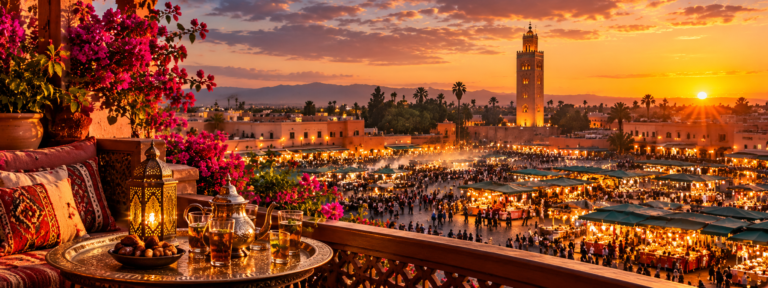
Marrakech is one of the best destinations for a first trip to Morocco.
Don’t miss:
- Jemaa el-Fna square
- the souks
- the Koutoubia
- Bahia Palace
- the Majorelle Garden
- traditional riads
- Moroccan cuisine
The Moroccan National Tourist Office describes Marrakech as a city known for its colorful souks, historic heritage and distinctive atmosphere.


Fes
Fes is ideal for travelers interested in Moroccan history and culture.
Its historic medina offers an opportunity to discover traditional architecture, crafts and centuries of cultural heritage.
Fes is particularly interesting for travelers interested in Jewish history because the city contains the historic Mellah, the former Jewish quarter.
The Moroccan tourism authorities describe Fes as a cultural and spiritual capital and highlight the Arab, Jewish and Andalusian influences present in its historic heritage.
Casablanca
Casablanca is Morocco’s largest city and an important economic center.
The city is particularly known for:
- Hassan II Mosque
- the Corniche
- Art Deco architecture
- restaurants and cafés
- modern Moroccan life
It can be an excellent starting or ending point for a longer Moroccan itinerary.
Chefchaouen
Known for its blue-painted streets, Chefchaouen is one of Morocco’s most photographed destinations.
The city is located in the Rif Mountains and offers a completely different atmosphere from Marrakech and Casablanca.


Essaouira
If you enjoy the ocean, relaxed atmospheres and cultural experiences, Essaouira is an excellent choice.
The city combines:
- Atlantic beaches
- historic ramparts
- a traditional medina
- seafood
- local crafts
- art and music
Its historic ramparts and coastal setting are among its defining attractions.
Can Israeli travelers visit Morocco’s Jewish heritage sites?
Yes, Morocco has a long Jewish history and Jewish heritage remains visible in several cities and regions.
Travelers interested in this aspect of Moroccan history can explore historic mellahs, synagogues, cemeteries and other heritage sites where accessible.
Examples include Jewish heritage associated with:
- Fes
- Marrakech
- Casablanca
- Essaouira
- Meknes
- Rabat
- Tetouan
- southern Moroccan towns
The Moroccan National Tourist Office specifically highlights the Arab, Jewish and Andalusian influences visible in the historic heritage of Fes. It also describes Jewish heritage elements in places such as Tetouan and the former Jewish quarter of Tinghir.
For travelers whose main purpose is Jewish heritage tourism, we recommend arranging the itinerary with a local professional who understands the historical sites and can organize the appropriate visits.
What about the Sahara Desert ?
A trip to Morocco would not be complete without considering the Sahara.
Merzouga, in southeastern Morocco, is one of the country’s best-known destinations for experiencing the desert.
You can enjoy:
- Erg Chebbi dunes
- sunset over the Sahara
- camel excursions
- traditional dinner
- desert camps
- stargazing
- local music and cultural experiences


For travelers with limited time, Agafay Desert near Marrakech offers a desert-style experience without traveling all the way to Merzouga.
How many days should you spend in Morocco?
The ideal duration depends on what you want to see.
4–5 days
A short trip could focus on:
Marrakech + Casablanca
or
Marrakech + Essaouira
7 days
A week allows you to combine several experiences:
Marrakech → Atlas Mountains → Aït Ben Haddou → Ouarzazate → Merzouga
10–14 days
A longer journey allows you to include:
- Marrakech
- Fes
- Chefchaouen
- Casablanca
- Essaouira
- Atlas Mountains
- Merzouga
- Sahara Desert
A private itinerary can be adapted according to your arrival airport and interests.
What is the best time to travel to Morocco from Israel?
Morocco can be visited throughout the year, but the best period depends on your itinerary.
Spring: March to May
Spring is excellent for:
- Marrakech
- Fes
- Atlas Mountains
- nature
- desert excursions
Summer: June to August
Summer can be hot in inland and desert regions.
For a summer trip, consider spending more time on the Atlantic coast, such as Essaouira or Agadir.
Autumn: September to November
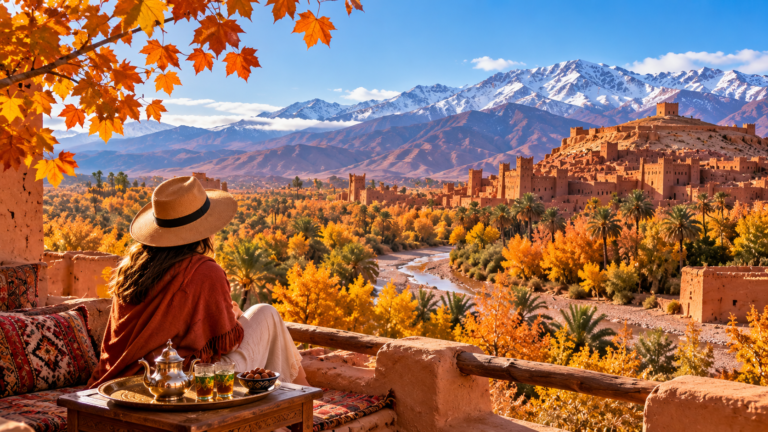
Autumn is another excellent season for combining cities, mountains and desert.
Winter: December to February
Winter can be a good period for Marrakech and the desert, while the High Atlas can experience colder conditions and snow.
What should you know about Moroccan culture?
Morocco is a predominantly Muslim country with its own customs and traditions.
Travelers should respect local culture by:
- dressing appropriately when visiting religious or traditional areas;
- asking before photographing people;
- respecting places of worship;
- being considerate during Ramadan;
- learning a few basic Arabic or French expressions.
Morocco’s tourism authorities emphasize hospitality, cultural heritage and traditional Moroccan lifestyles as central parts of the travel experience.
Is Morocco safe for Israeli travelers ?
Security conditions can change, and travelers should not rely solely on a travel blog when making a safety decision.
Israeli travelers should check the current travel warning issued by Israel’s National Security Council immediately before departure and during the trip. The Israeli government maintains a dedicated travel-warning database that is updated regularly.
It is also advisable to:
- keep your travel documents secure;
- avoid demonstrations and large political gatherings;
- follow local authorities’ instructions;
- keep emergency contact information available;
- check airline and airport updates before traveling.
Maroc Voyages Prestige can provide local logistical assistance and help travelers organize their itinerary, but official government travel advisories should always take priority for security decisions.
What currency is used in Morocco?
The official currency is the Moroccan dirham (MAD).
International Visa and Mastercard cards are accepted in many hotels, restaurants, shops and service stations, while ATMs are widely available. The Moroccan National Tourist Office recommends using banks, airports and official exchange offices for currency exchange.
It is still useful to carry some Moroccan dirhams for:
- small shops;
- markets;
- taxis;
- tips;
- rural areas.
What should Israeli travelers eat in Morocco?
Moroccan cuisine is an essential part of the travel experience.
Some dishes to try include:
🍲 Tagine
🥘 Couscous
🥣 Harira
🥧 Pastilla
🥩 Tanjia Marrakchia
🥞 Msemen
🍵 Moroccan mint tea
For travelers interested in kosher food, dietary requirements should be discussed with the travel organizer before arrival so that appropriate arrangements can be considered.
How can Maroc Voyages Prestige help?
Planning a trip from Israel to Morocco involves more than simply booking a flight.
At Maroc Voyages Prestige, we can help international travelers create a personalized Moroccan itinerary based on their interests, available time and travel style.
Our services include:
- private tours;
- tailor-made itineraries;
- airport transfers;
- private transportation;
- accommodation selection;
- desert excursions;
- Atlas Mountain experiences;
- cultural experiences;
- Jewish heritage-focused itineraries;
- family and group travel.
Our goal is to provide travelers with a reliable local partner in Morocco while allowing them to experience the country in a comfortable and authentic way.
Example itinerary: 7 days in Morocco from Israel
Day 1 – Arrival in Marrakech
Airport transfer and check-in at your riad or hotel.
Day 2 – Marrakech
Explore the medina, souks, Bahia Palace and Jemaa el-Fna.
Day 3 – Atlas Mountains
Discover the Atlas Mountains and local villages.
Day 4 – Aït Ben Haddou and Ouarzazate
Travel through spectacular landscapes toward southern Morocco.
Day 5 – Merzouga
Reach the Sahara and enjoy sunset over the Erg Chebbi dunes.
Day 6 – Desert experience
Enjoy a desert morning before continuing your journey.
Day 7 – Return or continue your Moroccan adventure
Depending on your flight schedule, return toward Marrakech or continue to another Moroccan destination.
This itinerary can be adapted to include Fes, Casablanca, Essaouira, Chefchaouen or Jewish heritage sites.
Final thoughts: traveling from Israel to Morocco
Travel to Morocco from Israel can be an unforgettable experience for travelers looking for culture, history, nature, gastronomy and authentic encounters.
From the streets of Marrakech to the historic heritage of Fes, from the Atlantic coast to the Sahara Desert, Morocco offers enough diversity to create a completely personalized journey.
Before departure, make sure to verify the latest Moroccan visa requirements, flight schedules and Israeli travel advisories. Entry requirements and operational conditions can change, so official sources should always be consulted immediately before travel.
For a personalized Moroccan itinerary, Maroc Voyages Prestige can help you plan your journey from arrival to departure.
Discover Morocco your way. 🇲🇦